
Little Flames Contributor Series
Spotlighting voices who spark change, one flame at a time. Meet Allison.

Welcome to Little Flames Contributor Series—a space for stories of resilience, reinvention, and creativity. In this month’s piece, Allison Kirkland and I talk about the intangibles — as a concept, a practice, and a way of living. We explore boundaries, appearance activism, and the quieter ethics of sharing one’s life through writing.
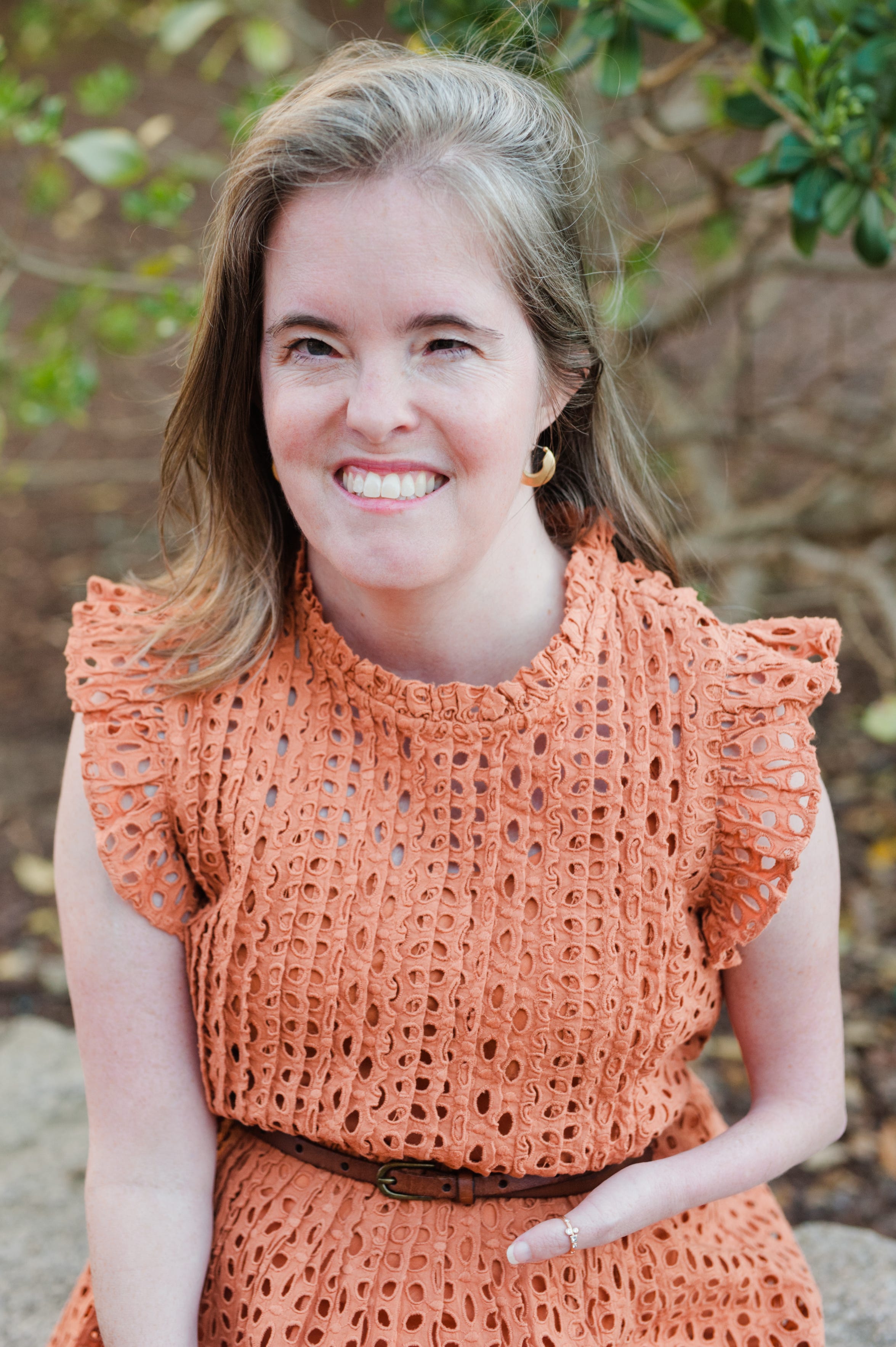
PROFILE SNAPSHOT
Name: Allison Kirkland
Superpowers: Vulnerability as a Backbone, Grounded Self-Trust, Gentle Power
My Favourite AK Quote: “What if it’s OK to be misunderstood? What if I don’t have to educate? What kinds of stories would I write if I wasn’t trying to teach?”
THE INTERVIEW
Melissa: Your Substack newsletter is called the intangibles. When I think of that word, it takes me back to my early career in marketing and sales, where intangibles were the added values we couldn’t quantify — like brand and reputation. I’ve been thinking about that idea differently now, in relation to writing and lived experience, and I’m drawn to how intangibles creates space for what can’t easily be measured or named. I’d love to talk with you about how that word holds in your disability experience and writing life.
Allison: I grew up in a very type A pre-professional atmosphere. I was taught to measure, to assess, compare. Everything was data and the data was used to place people in a hierarchy of usefulness and belonging. If you met certain data points, you could access certain experiences or privileges, like getting admitted to a certain college or being offered a certain job.
In my twenties I had a job as a grant writer at a small performing arts center. The grant makers always wanted us to measure the value of the programming. How many audience members were enriched by the concerts or the open mics or the staged readings that we held in our building? What was the exact percentage of the value of our programming?
It felt so silly to me, assigning this measurable value to something so intangible.
How can one measure the amount of enrichment they get from going to a poetry reading or a concert or a dance performance? How do you measure the degree to which seeing a sunset improves your life? Or smelling a gorgeous flower? How do you measure how much reading a good book improves your life? Or writing one? And honestly, why would you measure it?
If we define intangible as “of a value not precisely measurable” then I think there’s something quietly revolutionary about living in a disabled body – it’s different from the norm, and in some ways it’s not a useful or productive body. From the outside, my body might not look like much. But living in this body provides me with treasures that can’t be measured.
Melissa: In a recent post, you talk about the concept of boundaries. Can you share more about what you think about boundaries not just as limits, but as something that actively shapes your work. How have you learned to weigh privacy, visibility, and the desire to educate on your own terms through writing and speaking?
Allison: My thinking around this has evolved and I think it will continue to evolve. As someone who didn’t grow up around a lot of other visibly disabled people, I often felt a responsibility to represent the entire disability community. It was a lot of pressure.
People always asked about my hands. As a child it never even occurred to me that I didn’t have to answer them! After all, I was the one who was different. Sometimes, this form of education felt meaningful to me, and sometimes it still does. I enjoy thinking that part of my life’s purpose is making the future easier for disabled kids who are growing up now. Maybe my education has spread awareness, has defied stereotypes, has helped a small kid with a limb difference feel seen. I know that has been the case for me as I have encountered more disabled people speaking truthfully about their lives. And I know that I live in a world now where being disabled is a little less isolating, mostly because of the activists and writers who came before me who dared to write and share their story.
But educating others was also a bit self-serving, because I assumed that if people could understand me better, maybe I would make them less uncomfortable. To me, understanding was a replacement for a sense of belonging that I didn’t often feel. If someone understood my inner life and how I viewed the world, maybe they’d see me as more of a person, I’d feel more included.
But as I got older I realized that ultimately takes agency away from me because it still leaves the decision up to the other people. They still get to decide if I belong, and sometimes no amount of educating on my end will change their mind.
I still enjoy educating on my own terms, without any expectation that I’m changing the world or changing people’s minds – just to express myself and understand myself better. But these days I am asking myself: what if it’s OK to be misunderstood? What if I don’t have to educate? What kinds of stories would I write if I wasn’t trying to teach?
From a craft level, I sometimes think that stories that aren’t here to teach something or to translate one’s experience in a way that others might understand actually make for more interesting, surprising stories.
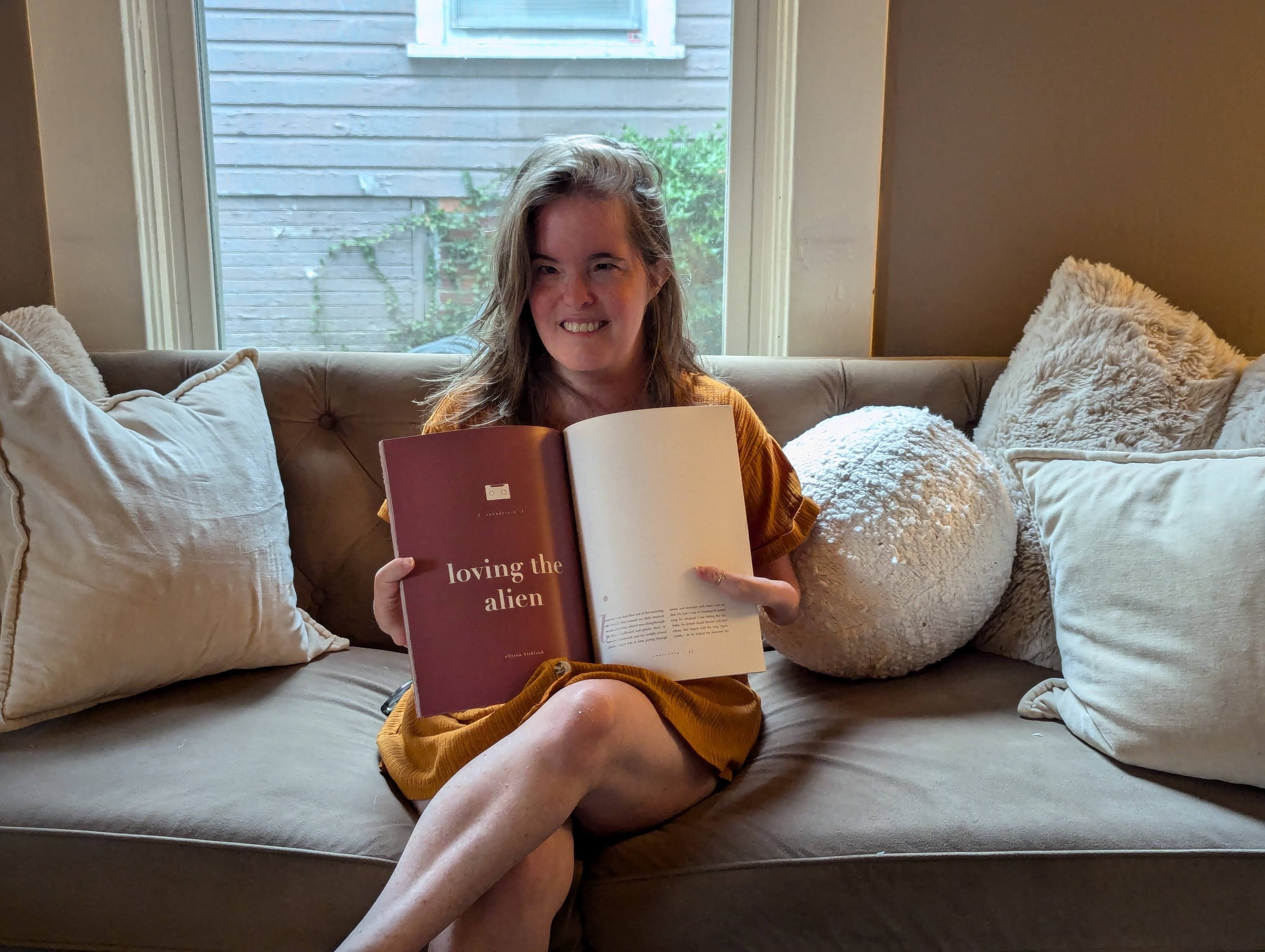
Melissa: I’d never heard the term Appearance Activism before you talked about it. First of all, thank you. Secondly, you’ve also written about how beginning your MFA in 2012 shifted how you thought about sharing your story. I’d love to hear more about how language and education changed your relationship to visibility.
Allison: I learned the term appearance activism from the writer Carly Findlay. I was so thankful for the term because it helped me to make sense of the way in which I think about my own activism and my own experience of living in my body.
I often hear disability talked about in terms of, well, ability! What a body can and can’t do – full stop. I never connected quite as much to that. I always had beautiful handwriting, for example. And I am also really good at using my hands as tools, even if I don’t have as many fingers. I can do all kinds of things that people assume I can’t do. I do benefit from certain accessibility tools, and doing things like chopping veggies or pouring tea from a hot kettle are still difficult. But overall I rarely feel that my limb difference impacts my abilities.
But I can’t change my appearance. That is something I cannot adapt. And that’s a facet of my identity and lived experience that was not talked about much as I grew up: I just didn’t look like everyone else! My different appearance – more than ability or lack of ability – also contributed to much of the isolation I experienced as a child.
I once did a book report in middle school on the giant squid. The report included an art component – I illustrated a deep-sea scene. It was a beautiful illustration, and my English teacher asked to frame it and display it in his classroom. He would often point it out to his students and say, “The person who made this illustration was born with a physical disability. So anytime you feel you’re not capable of something, use this as a reminder that you can do things you think you can’t do.” Yes, it was a generous gesture, and it made me feel pride that he displayed the illustration. But I did not feel seen and understood by this gesture because I never felt that my artistic ability was impacted by my limb difference. So, to me, I didn’t connect with the story he was telling about this piece of art. I would have told a different story to illustrate my perseverance and my strength. And I would have told a different story about what it meant to create that illustration.
When you spend decades navigating that chasm between your experience of living in the world vs what people think your experience is of living in the world, you’ll feel compelled to locate language that accurately represents your lived experience across that chasm. It’s an act of translation.
I actually found it difficult to write about myself during my MFA program. I was younger and many of the questions I was trying to examine in writing my memoir would take years for me to fully confront.
It was only when I connected to the disability community online many years later – through Instagram – that I felt fortified with enough support to start writing my story. The disability and appearance activists online introduced me to words and phrases that felt more in line with my own experience – “limb difference” instead of “birth defect,” for example. Just knowing that I had the agency to choose language that felt more like me gave me the confidence to use language in a way that felt more empowering overall, whether I was picking a label for myself or picking the words in my memoir. This transformed how I’m writing my own story, and it has made me more comfortable being visible because I have reclaimed so much of my agency with the help of language.
Melissa: Hmm. I can relate to so much of this. The language or “labels” we and others use to describe appearance and lived experience. And also the assumptions made about artistic or handwriting ability based on appearance. How appearance is unevenly weighed against actual ability or adaptability.
As you work on your memoir, how are you deciding what to include and what to leave out—both in terms of material and personal exposure?
Allison: I am 55,000 words into the first draft of my memoir, and there is a lot that I still have to uncover about the story I’m telling. There’s a great quote by the memoirist Melissa Febos: “The idea that memoirists are over sharers who crave attention is erroneous. We are usually people who have hidden large swaths of ourselves in order to appeal to others, to feel safe. By the time we write our memoir, those concealed parts have become too heavy to bear.”
I hid a lot, throughout my life, about what it meant to exist in my own body. I hid it from others and I hid it from myself. It became so weighty that now writing this first draft feels like finally putting down heavy luggage after going on a long trip. It’s really liberating, and I feel lighter.
The touchstone for me is always vulnerability. That’s what I have to keep coming back to, again and again. There’s a difference between being vulnerable and oversharing. As long as I focus on vulnerability, I feel like I can share a deep part of myself without feeling overexposed.
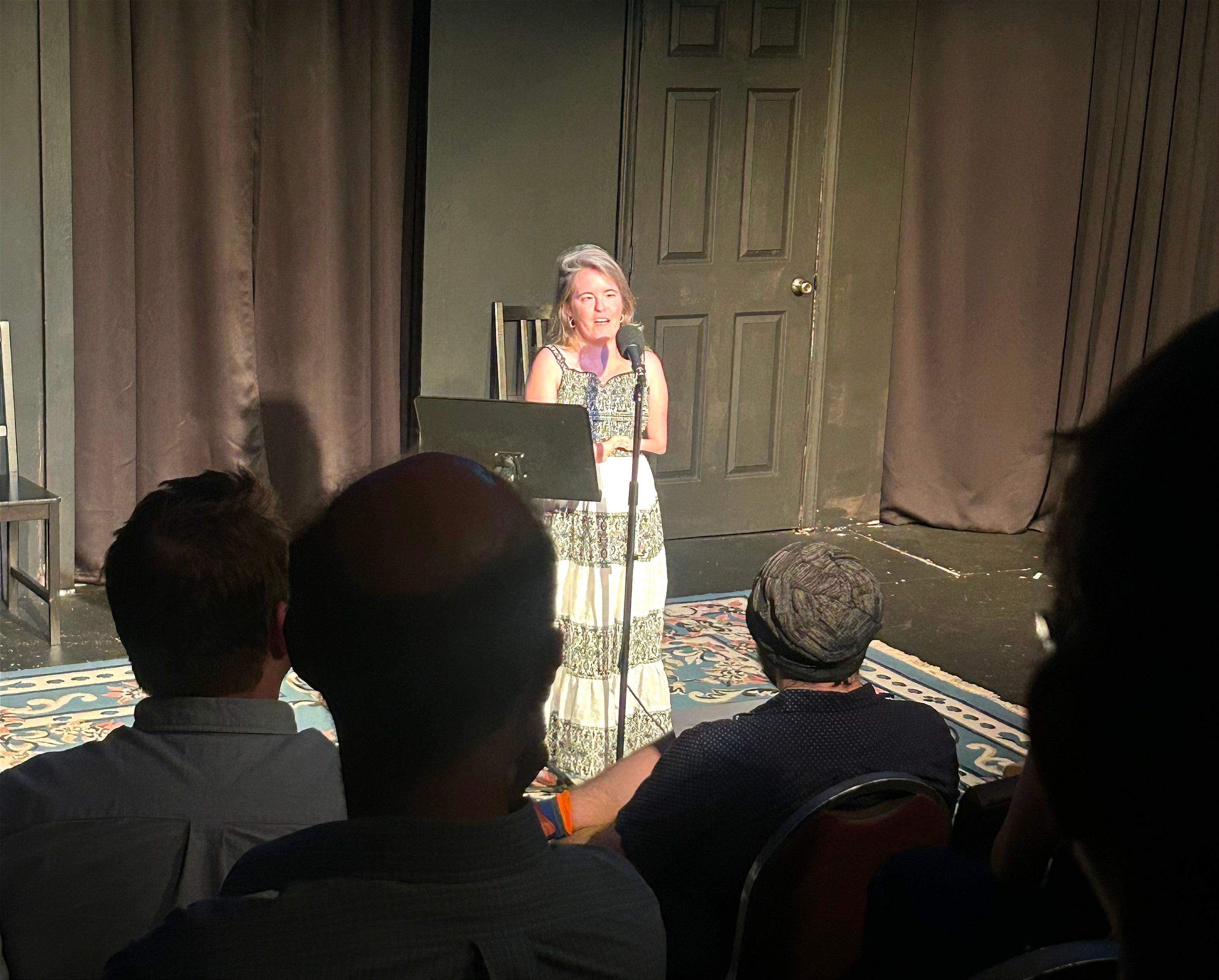
Bull City Press Reading Series in Durham, NC. Melissa: I’m also curious about the writers and artists inspiring you right now—across memoir, newsletter writing, teaching, and your reader prompts. I noticed you recently shared a page from Frida Kahlo’s sketchbook in a newsletter.
Allison: I do admire Frida Kahlo, although after reading Emily Rapp Black’s memoir Frida Kahlo and My Left Leg. I don’t feel like I have anything to add to that conversation. It’s such a good book!
I read a lot of fiction, even though I teach personal essay and memoir. Recently I loved The Wilderness by Angela Flournoy about a group of 5 millennial black women navigating “the wilderness,” that critical time from your 20s to 40s. I tend to love novels that follow a set of characters for many decades or even generations. Pachinko by Min Jin Lee is another book that comes to mind when I think of this type of book structure.
I love to say that reading counts as writing (right?) because our writing benefits from reading widely across genres. I love the immediacy of poetry and the fact that I can sit with a poem almost as a meditation, maybe during times when I can’t focus on a whole book. I never try to understand the poem; I just let it wash over me and transform me. I love listening to The Slowdown Podcast, which gives us a poem and a moment for reflection every week. Each episode is only about 5-7 minutes long, so it’s a really easy way to bring more poetry into your life.
There is such a wealth of good writing on Substack. I’ve been getting a lot out of Our Bodies: Ourselves by Liddy Grantland. Liddy has been writing with great wisdom about what it means to have a body for many years. Then last year she was diagnosed with Stage IV cancer at age 26. She manages to explore disability, care work, cancer, and everything in between with a light, honest touch that never leaves me feeling drained despite the heaviness of some of the topics. I am thankful that she gives us access to her wise, brilliant brain.
Notes from Mel
Every time I have the opportunity to interview someone, I feel the edges of my community expand. Eighteen years into living with my body’s fracture, I’m still learning the beauty of human complexity. Allison’s words—tender, grounded, vulnerable yet powerful—will stay with me.
I’m escaping winter with a dear friend next week, but I’ll be back in March with more musings. I’d love to hear what you’d like more of—or less of —while I’m away. As always, thanks for reading, sharing and joining me on my writing journey.