
Little Flames Contributor Series
Spotlighting voices who spark change, one flame at a time. Meet Sarah.

Welcome to the first instalment of the Little Flames Contributor Series—a space for stories of resilience, reinvention, and creativity. Every so often, I’ll be speaking with people who are reimagining their paths and lighting new fires despite the obstacles in their way.
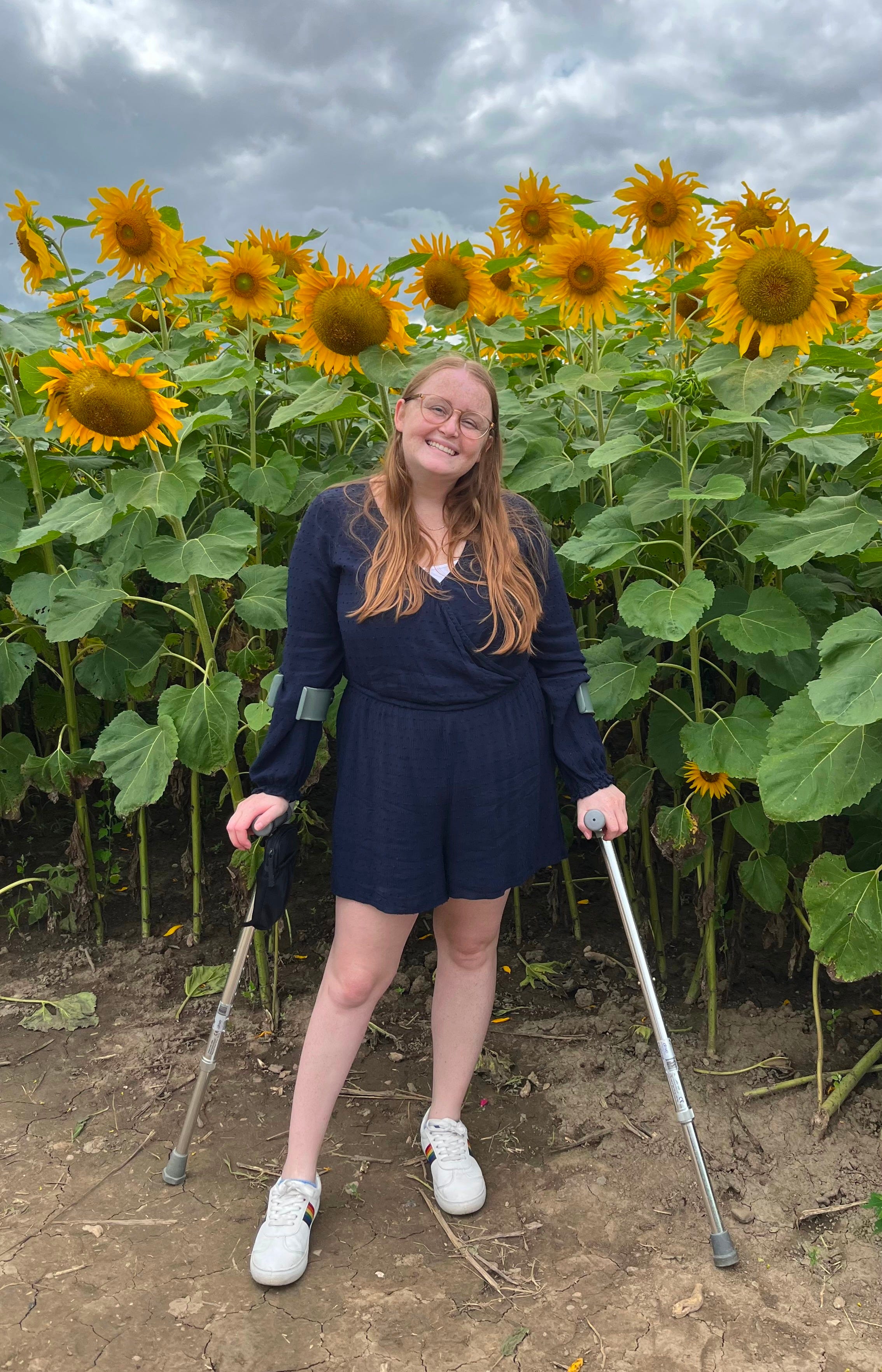
Meet Sarah—student, artist, traveller and future healthcare professional—whose lived experience with disability shapes how she approaches care, advocacy, and the human body.
PROFILE SNAPSHOT
Name: Sarah Nelson
Program: Occupational Therapist Assistant & Physiotherapist Assistant, Georgian College
Passions: Anatomy, advocacy, painting, baking, black cats
Superpower: Turning personal challenges into patient-centred care

Sarah Nelson is a disabled and neurodivergent artist and student who grew up in Barrie, ON. She currently attends Georgian College studying to be an Occupational Therapist and Physiotherapist Assistant (OTA&PTA). Sarah also tutors other students in her program, as well as paints commissions in her free time.
THE INTERVIEW
1. Sarah, how has your lived experience with disability shaped how you see rehab work?
I think that for a lot of people, their career is just a job. That’s not to say that they aren’t passionate about what they do; however I think there’s a big difference between being educated solely through college/university programs and actually having lived experience on top of this. A lot of people may be surprised to hear this, but I am thankful for my disability. It is incredibly challenging, of course, (and I wish it didn’t include so much constant pain), but it has taught me so much about the important things in life. Having this intimate knowledge of disability will truly benefit my patients, because I see my job as a partnership rather than being in a position of authority. Patients know their body the most, and I am there to encourage them to grow the confidence to advocate for their needs. I also feel that the goals we work on during therapy sessions should come from the patient. This is their life, and I am helping them learn ways to best live it, in the most meaningful ways to them.
She adds:
“I’ve always really enjoyed learning about anatomy and physiology, but it wasn’t until I became a patient myself—and had to utilize these services—that I knew in my heart that was what I was meant to do."
2. Do you remember a moment as a patient that changed how you think about care?
A major theme I found when becoming disabled and relying on professionals for help is the loss of control over your body. It seemed like overnight, my once strong and capable body became unfamiliar, weak, and unpredictable. As a preteen struggling with self-identity and body image issues, this lack of control was extremely distressing. However, one of my specialists at SickKids, whom I’ll never forget, reminded me that I was the same Sarah I always have been. I was just rediscovering my new physical self. He never just stopped at basic care; he pushed for answers and quality of life, and always believed in me. He advocated and reminded me of my worth, never making me feel silly or bad for my symptoms. This is how I always hope to be, as the person now on the other side of treatment; treating patients as people first.
“Medical practitioners have the opportunity to truly make a difference in their patients’ lives, and they are who these individuals rely on and look up to when they are going through an incredibly challenging time.”
3. What’s a day in your life like—juggling school, art, and managing your health?
I always like to joke that having a disability is like a full-time job you never trained for or get paid for. Adding to this, school and regular life make juggling everything quite a challenge. Society likes to guilt us into believing that rest isn’t productive, however when you have a disability, if you neglect this innate need, you’ll end up paying for it in other ways. I have learned the art of balance over the last 12 or so years managing pain and symptoms (and still don’t have this perfected!). When I decided to attend post-secondary education, I couldn’t go at the same pace as my peers. This was difficult to accept at first because I didn’t want to be seen as incapable. I also encountered surprising accessibility challenges, as it seems that even a college program focused on rehabilitation science has its limitations. I remember at one point I used to have monthly procedures in Toronto and then would rush home exhausted in time to attend 4-hour lab classes or placement. Thankfully, I now only have placement left to complete before graduation, which leaves a lot more time for self-care and hobbies like painting and baking. My life isn’t easy, but I don’t think anyone’s is, and despite the challenges that disability poses, it still contains so much beauty and joy.
“Navigating my own access needs posed challenges, but also creative solutions. The confidence I have gained allows me to know that once I graduate, I have the knowledge and skills to truly make a difference for the people I care for.”


A Note from Mel
Sarah reminds us that lived experience can be its own powerful training, and that art is not only a form of expression but also a way of navigating the body and the world.
Her story is a reminder that even in difficulty, sparks of possibility ignite—and when shared, they can light the way for others. You can explore more of Sarah’s expressions through art on her Instagram page.
Mel, this series is smart. I was glad you introduced me to Sarah's voice and POV in this profile. Such spotlights need to leave us with a different sensibility so that the disability itself becomes secondary - almost - to what we get from the person. To me, Sarah is creating a new and holistic treatment approach for people who seek relief from the therapeutic community. Sarah's disability might have sparked it, but her personality and approach underpin its success; she will build a client base easily because she offers innovation to an exhausted market, the needs of which are often not fully understood. Keep going! A revelatory anthology of interviews is on your horizon.
Ah, I’m very good at helping others see their gold, Mon Amie !