

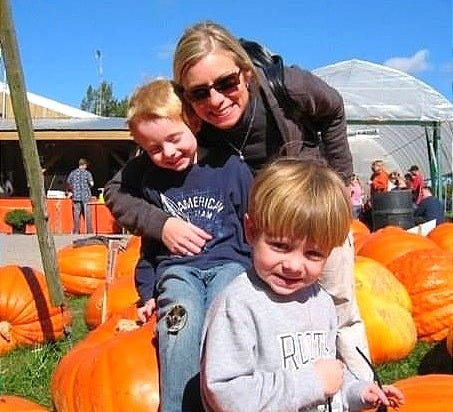
At thirty-five, I was living an active, full life—raising two young children in a beachside community in East Toronto, building a career with one of North America’s largest newspaper organizations, and training for a half-marathon.
Then, on one ordinary morning, I woke with a sharp pain in my neck. Within minutes, it escalated into paralysis.
By the end of the day, I lost the ability to breathe, speak, and move. I was ventilated, and placed on life support in a medically induced coma. Everything I knew—home, family, career—was severed.
I spent eight months in the hospital, away from my children, then embarked on a decade-long physical rehabilitation journey. I traversed the medical system, meeting with specialists worldwide, and undergoing tests and treatments in search of a cure.
I also began to encounter the limits of the supports and systems around me.
When we tried to build an accessible home, we were met with resistance from a neighbour, and, unexpectedly, from our own city councillor. What followed was a relentless effort to fight NIMBY-ism, exposing how access is something that must be fought for, rather than assumed as a human right.
My marriage, once a source of strength, shifted as caregiving replaced intimacy. Its eventual end marked another rupture. I became a single mother navigating a legal and custodial battle while trying to rebuild my life.
Alongside all of this, another kind of reconstruction began.
I began to write.
I returned to journals, to medical records, had conversations with clinicians who treated me. With hundreds of pages of medical notes splayed across my dining room table, I began to trace my illness through records.
Merging these fragments—memory and documentation—allowed me to assemble a timeline, reconcile the parts I could not remember due to coma, sedation and what I refer to as narcotic eclipse.
Writing within these dual parameters of medicine and memory became an act of pilgrimage and reclamation.
What this is
Little Flames is a bi-monthly newsletter where I write about illness, disability, and what it means to rebuild a life in a body that no longer cooperates.
I write personal essays, reflect on access and the built world, and interview disabled creatives and change makers. My writing is grounded in lived experience, but it also looks outward—at the systems and assumptions that shape how we live.
Where to begin
If you’re new, you might start here:
The beginning
→ Medicine, Memory and Making Sense
On access and the built world
→ Access via a Staircase: A Love Story (Part 1)
On identity and reconstruction
→ I Came Back Changed. And So Had the Campus, Or Had it?
On publishing and (almost) winning contests
→ Publishing Purgatory and Still in the Water
A note on my work
My memoir, Little Flames Under My Skin — Rebuilding a Life, One Neuron at a Time, was awarded 2nd Place in the AWP Sue William Silverman Prize for Creative Nonfiction.
It has been endorsed by Cheryl Strayed, who writes:
“LITTLE FLAMES UNDER MY SKIN is a riveting, harrowing, and profoundly inspiring book about how the author survived and ultimately thrived after she was struck by a sudden, debilitating illness in the prime of her life. With astonishing intimacy, honesty, and insight, the author writes about the fearsome vulnerability of being a patient on the brink of death, about the long and painful process of recovering the most basic bodily functions, about grieving the life altered and the career, home, and marriage that were lost due to her illness, and—perhaps most importantly—it’s about how she fought every day to rebuild her life anew, one brave breath at a time. I’ll never forget this powerfully illuminating memoir.”
My story has been featured in The Globe and Mail, Toronto Star, and CP24, and in essays and interviews with Brevity Blog, Truly Important, PublicationCoach.com, the University of Toronto’s uLearn blog, and the podcast Intuitively Aligned.
If this resonates
You can subscribe below to receive new work, or reply to any post—I read every one.